







Published Wed 18th Nov 2026
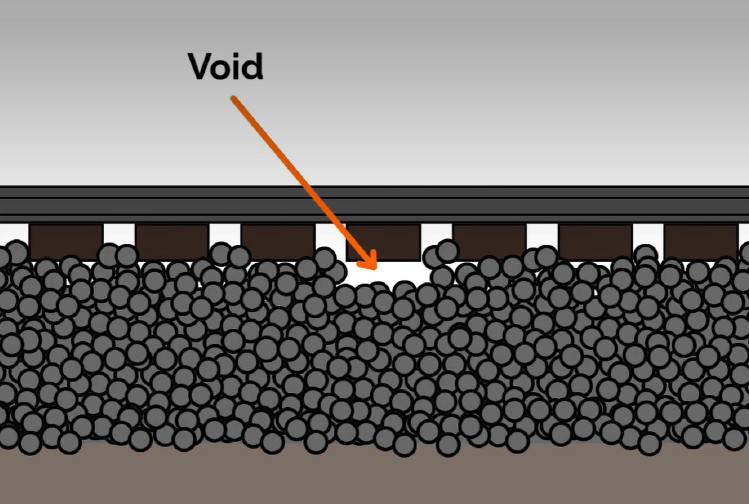
Voids beneath railway track can develop gradually, affecting sleeper support and causing increased vertical rail movement under passing trains. If left undetected, these conditions can contribute to track degradation, costly maintenance and operational disruption.
But how can rail engineers identify developing voids between scheduled track surveys?
Measuring vertical rail deformation under live train loading provides valuable insight into how track responds to actual operating conditions. With automated wireless monitoring, engineers can collect this information continuously at individual locations, helping identify changes in track behaviour and prioritise maintenance before problems escalate.
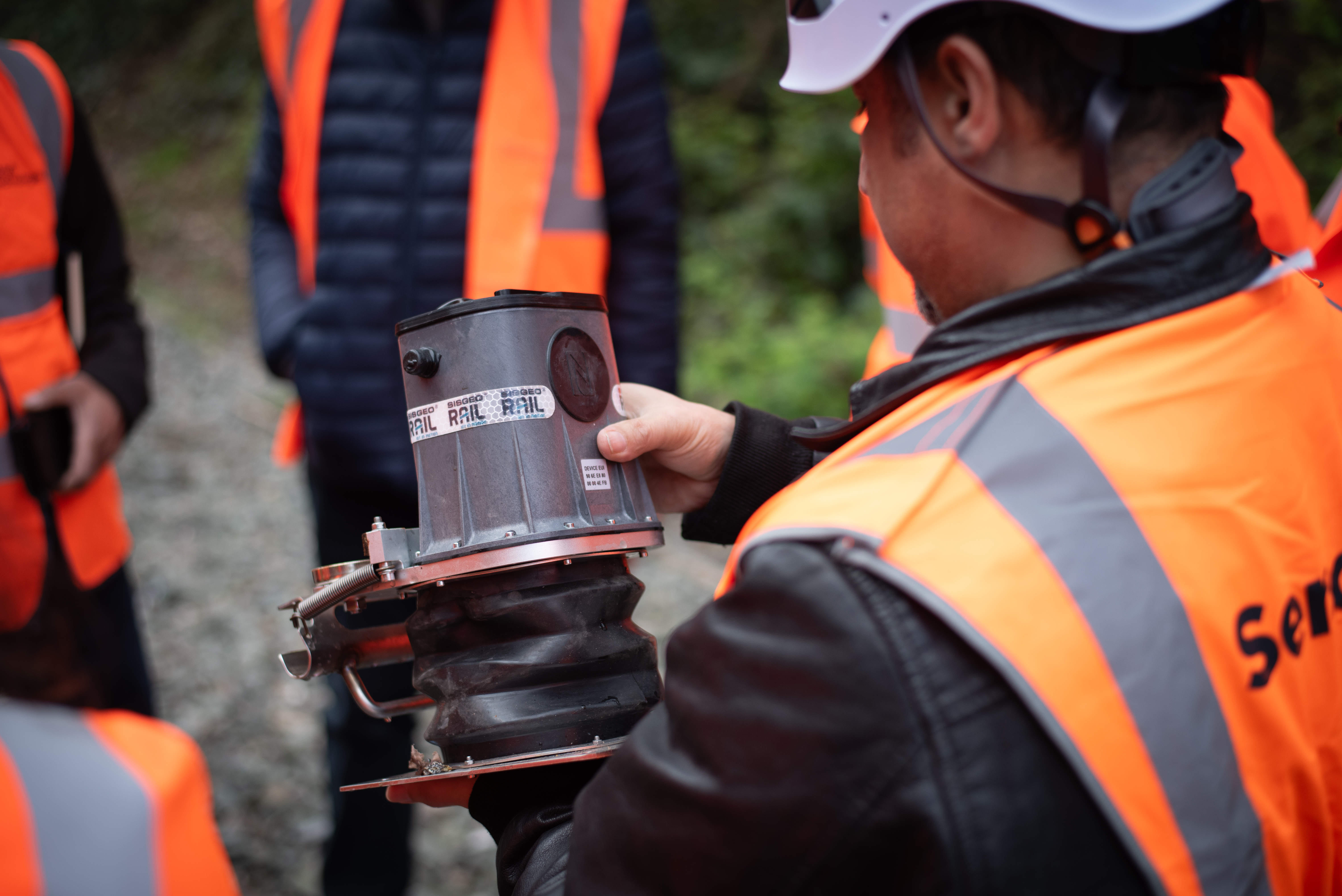
FLX-Rail is a wireless dynamic void meter designed to do exactly this: directly measure rail deflection under passing trains, automatically capturing data without requiring engineers to be present at the monitoring location.
Why is measuring vertical rail deformation important?
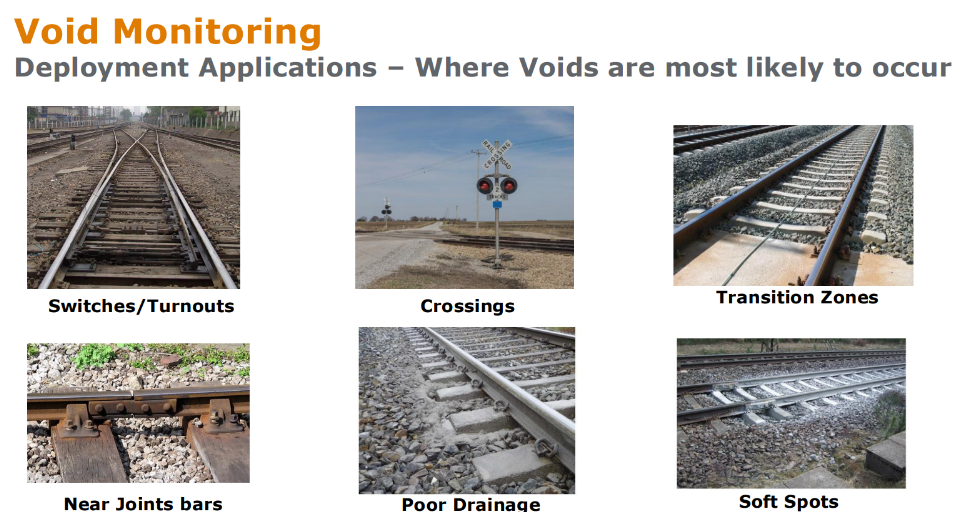
Railway track relies on consistent support from the ballast, sleepers and underlying substructure. Over time, repeated train loading, changing ground conditions, water ingress and ballast deterioration can compromise this support.
Where support is lost, voids can develop beneath sleepers. As trains pass over these locations, the rail and sleeper system can experience increased vertical movement, potentially contributing to further deterioration.
This is particularly relevant when monitoring pumping ties, where repeated movement under train loading can indicate compromised support conditions.
Measuring vertical rail deformation helps engineers understand how the track responds under actual operating loads. Changes in rail deflection can provide an indication of developing support problems, allowing engineers to identify locations that may require further investigation.
For Class 1 freight railroads managing extensive track networks, passenger rail operators and transit authorities responsible for safety-critical corridors, having access to this information can support more targeted track condition assessments and maintenance planning.
How do you measure rail deflection during train passages?
Measuring rail deflection under dynamic load requires instrumentation capable of capturing vertical rail movement while trains are passing.
Traditional track assessment methods provide valuable information about infrastructure condition, but they have different capabilities and limitations:
-
Track geometry cars: Provide network-level information about track geometry and irregularities, helping identify areas requiring further investigation. However, they do not provide continuous, site-specific measurements of rail deflection under live train loading.
-
Ground-penetrating radar (GPR): Helps assess subsurface conditions and identify potential variations in track support, but does not directly measure vertical rail movement during train passages.
-
Accelerometer-based monitoring: Measures acceleration and vibration, from which movement or other track conditions may be inferred. It does not provide the same direct measurement of vertical rail deflection.
A dynamic rail void meter such as FLX-Rail takes a different approach, directly measuring maximum vertical rail deformation at the monitoring location as trains pass. This provides information about how the track responds under actual operating loads, complementing other assessment tools with continuous, site-specific measurement between scheduled surveys.
What is a dynamic rail void meter?
A dynamic void meter, sometimes described as a dynamic void gauge or digital track void gauge, measures rail movement under passing train loads to help engineers assess track support and identify potential void development.
FLX-Rail is a wireless dynamic rail deflection device that measures maximum vertical rail deformation under live train loading.
Rather than relying on indirect signals to infer void conditions, it provides direct measurement of rail movement at the individual monitoring location.
This offers several important benefits:
- Direct measurement under live train loading : FLX-Rail measures vertical rail deflection during actual train passages, providing insight into how track responds under operating conditions.
- Continuous, site-level monitoring: Automated wireless data collection provides ongoing measurement at selected locations, complementing wider network-level monitoring and scheduled geometry surveys.
- Earlier identification of developing problems: Changes in rail deflection can help engineers identify locations where track support may be deteriorating, enabling earlier investigation and more proactive maintenance.
Detecting under-track voids remotely with wireless monitoring
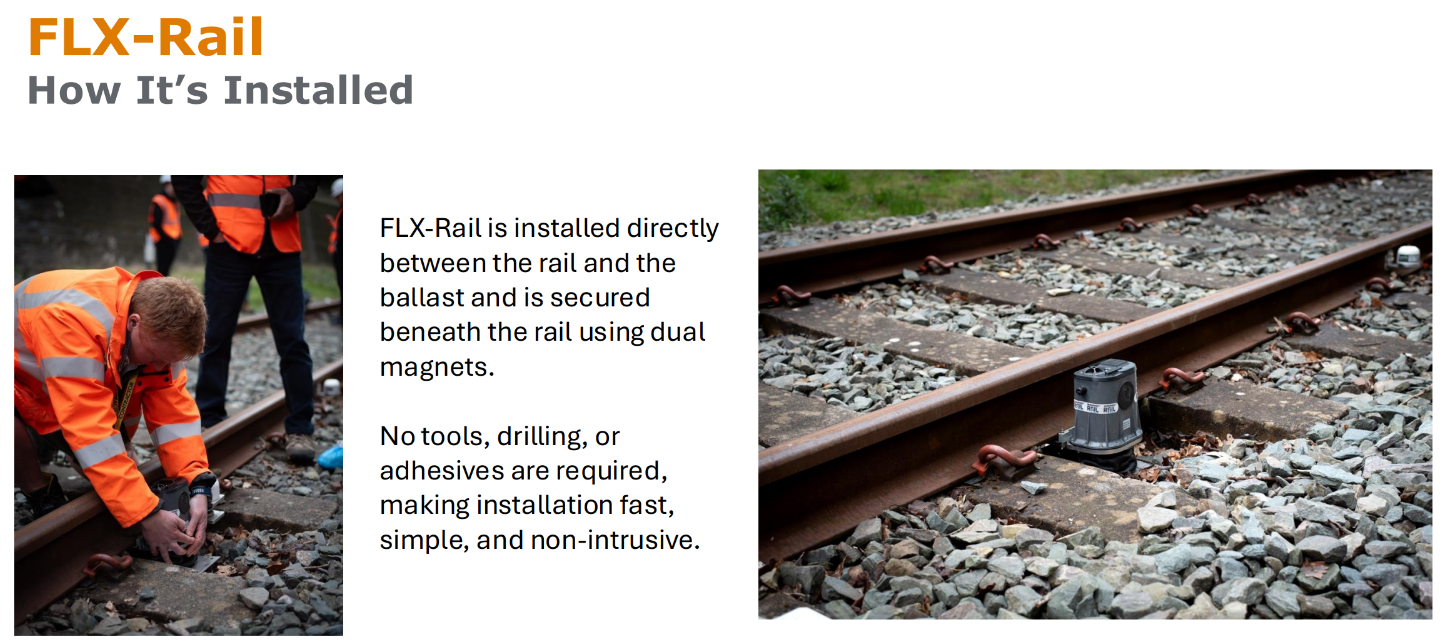
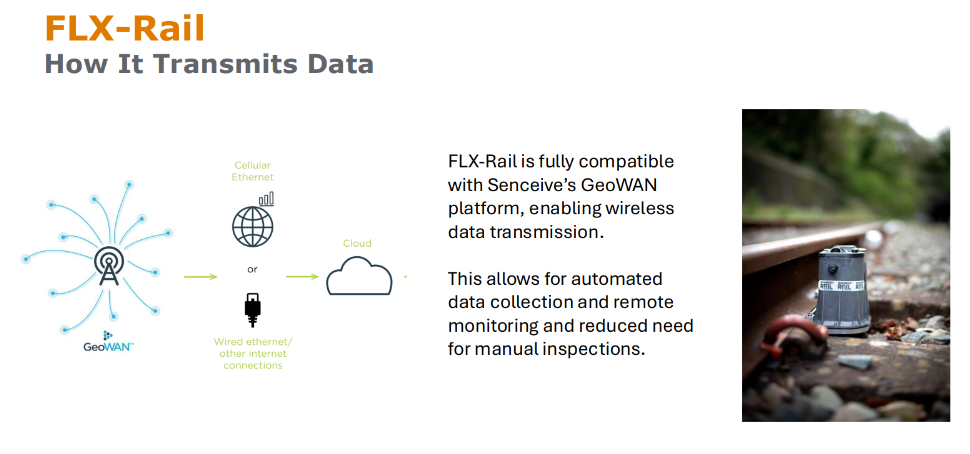
One of the main advantages of FLX-Rail is its ability to collect measurements automatically without requiring an engineer to attend the site for every train passage. Using SBV® (Start By Vibe) technology, FLX-Rail activates in response to the vibration of an approaching train, capturing the relevant measurement data while maintaining ultra-low power consumption. Fully integrated with Senceive's GeoWAN platform, FLX-Rail enables scalable, long-range wireless monitoring, automated data collection and remote access to measurements. Its compact wireless installation also avoids exposed mechanical arms and laser components that can be vulnerable to obstruction.
This approach is particularly useful for:
- Pumping ties: Monitoring changes in vertical rail movement at locations where sleeper support may be compromised.
- Known problem areas: Tracking locations with a history of void development or recurring maintenance requirements.
- High-traffic rail corridors: Monitoring selected locations exposed to repeated train loading.
- Remote infrastructure: Reducing the need for regular site visits to collect measurements.
- Safety-critical locations: Providing additional information to support track condition assessments and maintenance prioritisation.
By combining direct measurement with automated wireless monitoring, engineers can gain greater visibility of individual locations without relying solely on periodic surveys.
FLX-Rail combines specialist dynamic rail measurement with Senceive's established wireless monitoring technology, offering several practical advantages for rail infrastructure monitoring.
- Direct rail deflection measurement: Measures vertical rail movement under live train loading rather than inferring void conditions from indirect measurements.
- Automated wireless operation: SBV® activation captures measurement data as trains approach, without requiring manual intervention.
- Long-range connectivity: Integration with Senceive's GeoWAN platform enables scalable wireless monitoring and remote data access.
- Compact installation: No exposed mechanical arms or laser components that are prone to obstruction.
- Long battery life: Designed for long-term remote monitoring, with longer battery life compared with FTS Tools.
- Regional frequency options: Available in 868 MHz and 915 MHz variants to support deployment in different regions.
FLX-Rail provides a practical solution for geotechnical consultants, monitoring service providers, survey specialists, rail infrastructure owners and operators looking to enhance their track monitoring approach.
Frequently asked questions about rail deflection and void monitoring
How do you measure rail deflection during train passages?
Rail deflection during train passages can be measured using a dynamic rail deflection device such as FLX-Rail. It directly measures vertical rail movement as trains pass, providing information about track response under live loading rather than relying on indirect indicators or periodic surveys.
How can vertical rail movement be measured under full live train loading?
Measuring vertical rail movement under full live train loading requires instrumentation capable of capturing track response during actual train passages. FLX-Rail uses SBV® (Start By Vibe) activation to detect approaching trains and automatically capture maximum vertical rail deformation under operating conditions.
What is the difference between a dynamic void meter and a track geometry car?
A track geometry car provides network-level information about track geometry and condition, typically through scheduled surveys. A dynamic void meter such as FLX-Rail provides direct, site-specific measurement of vertical rail deflection under live train loading. The two approaches offer complementary information for track assessment.
What is a vertical track deflection gauge?
A vertical track deflection gauge is a device used to measure vertical movement of railway track under loading. FLX-Rail is a wireless monitoring solution that automatically measures vertical rail deflection during train passages, providing remote access to site-level measurement data.
How can rail displacement from passing trains be monitored continuously?
FLX-Rail uses vibration-based activation called SBV® (Start By Vibe) to detect approaching trains to capture the relevant data as trains approach, providing ongoing insight into track behaviour without requiring an engineer to be present at the monitoring location.
What is the benefit of measuring maximum vertical rail deformation?
Measuring maximum vertical rail deformation helps engineers understand the extent of rail movement under passing train loads. Tracking changes in maximum deflection over time can help identify locations where track support conditions may be changing and where further investigation could be required.
Discover how FLX-Rail combines direct dynamic rail deflection measurement with wireless monitoring platform to provide automated, remote insight into track behaviour under live train loading: Explore FLX-Rail
Discover more about Senceive's wireless track geometry monitoring: Explore Wireless Rail Track Monitoring