






Published Wed 10th Jun 2026
High-precision measurement of vertical track profile
Understanding railway track behaviour over time is fundamental to maintaining safe and reliable operations. This behaviour is defined by a range of track geometry parameters including crosslevel/cant, twist, slew/buckle, vertical alignment and more - each providing insight into track condition.
Often referred to as track profile, surface profile, or vertical alignment, this parameter describes the shape of the rail in the vertical plane and how it changes along the track. For heavy-haul and high-demand rail networks, accurate measurement of vertical alignment is essential, as operational loads and speeds place increased stress on the infrastructure.
Developed in collaboration with major asset owners, Senceive has advanced the accuracy of track profile monitoring by designing a rail-mounted wireless tilt solution engineered and tested thoroughly for reliable performance in challenging track conditions.
Why vertical track profile matters
Changes in vertical track profile or surface profile, such as dips and humps, can develop due to:
- Poor drainage and ballast fouling
- Subgrade instability
- Construction activity near the track
- Deferred maintenance
- Structural transitions (bridges, crossings, platforms)
If left unmanaged, these issues can result in:
- Reduced ride quality and operational instability
- Increased mechanical stress and component fatigue
- Speed restrictions
- More frequent maintenance intervention
- Increased risk of derailment
Measuring true vertical alignment at the rail
Established remote monitoring methodologies commonly use sensors mounted to sleepers (ties). These systems remain the ideal solution for measuring parameters such as cant/crosslevel and twist. Whilst they provide essential geometric context and are highly effective for understanding general track condition over extended distances they cannot take into account the possibility of variations in the behaviour of the tie and the rail.
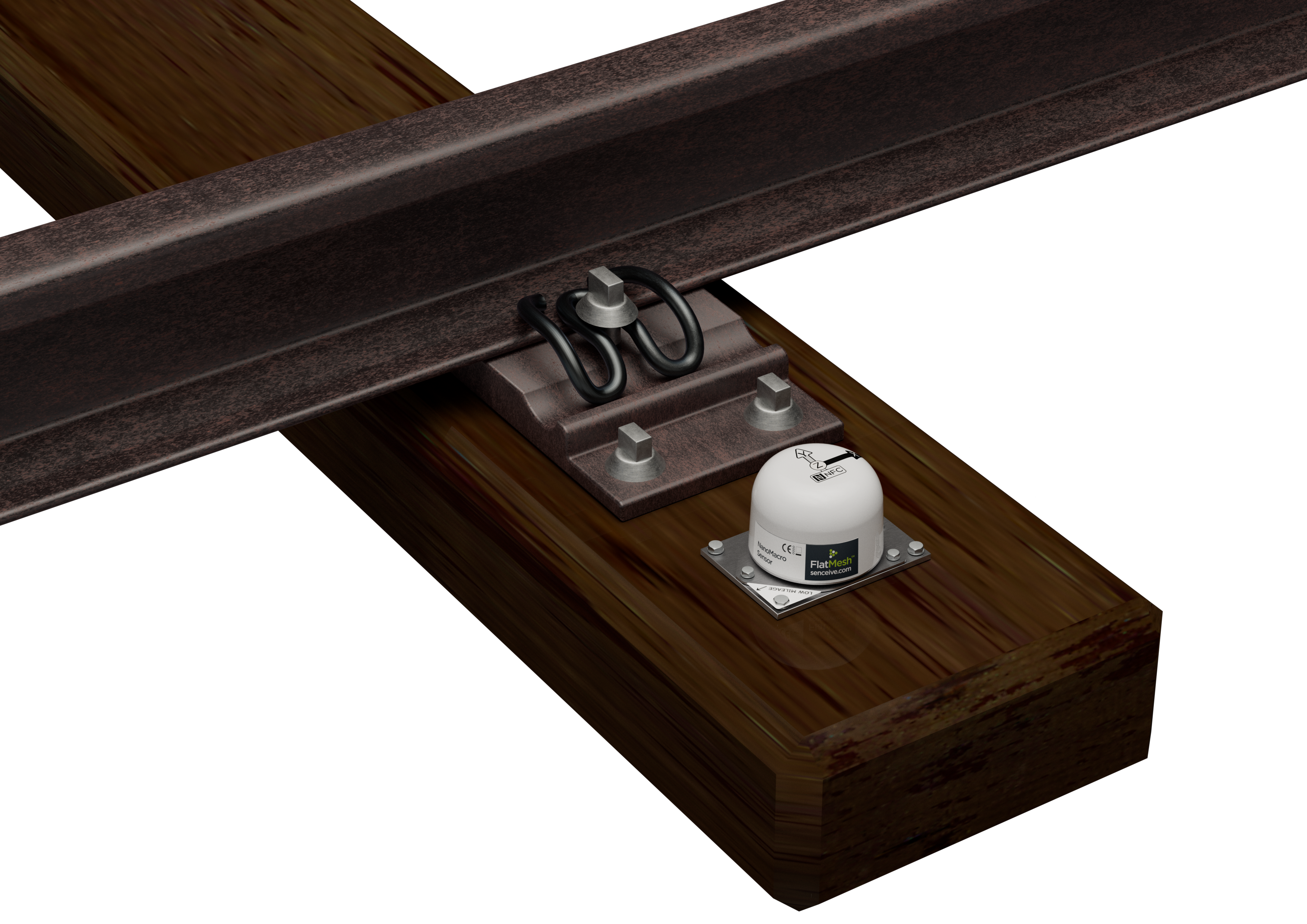
Sleeper/tie-mounted triaxial tilt sensor: the ideal solution for measuring parameters such as cant, twist, and overall track geometry across long sections of track.
Rail-mounted tilt monitoring complements this approach by capturing vertical alignment directly at the rail.
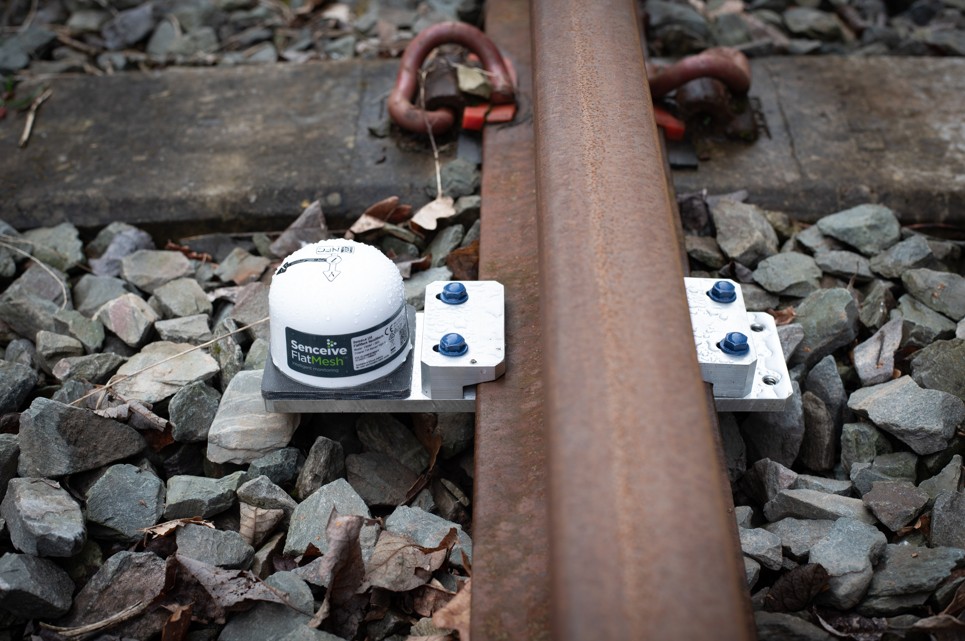
By mounting NanoMacro High-G Triaxial Tilt Meters directly onto the rail, rather than on sleepers or ties, the system captures subtle alignment changes at the point of interest. This delivers higher-resolution insight into vertical rail movement and a more direct representation of true longitudinal track behaviour. This is particularly valuable in conditions where there is poor cohesion between ballast, sleepers, fastenings, and rail. In these scenarios, measuring directly at the rail ensures the data reflects actual vertical alignment, rather than influenced or dampened movement.
Used together, sleeper-mounted and rail-mounted monitoring provide a comprehensive view of track behaviour.
How vertical track profile is calculated
Senceive’s system measures vertical track profile by capturing rotational changes along a chain of wireless tilt sensors.
Each sensor records tilt along the longitudinal axis of the rail. These small angular changes are converted into vertical displacement between adjacent nodes and accumulated along the monitoring zone to create a continuous surface profile.
This enables engineers to identify:
- Localised dips and humps (short wavelength defects)
- Ballast-related deformation (medium wavelength)
- Subgrade or construction-induced movement (long wavelength)
Unlike point-based settlement measurements, this approach provides a full profile of the track, delivering deeper insight into how vertical alignment evolves over time.
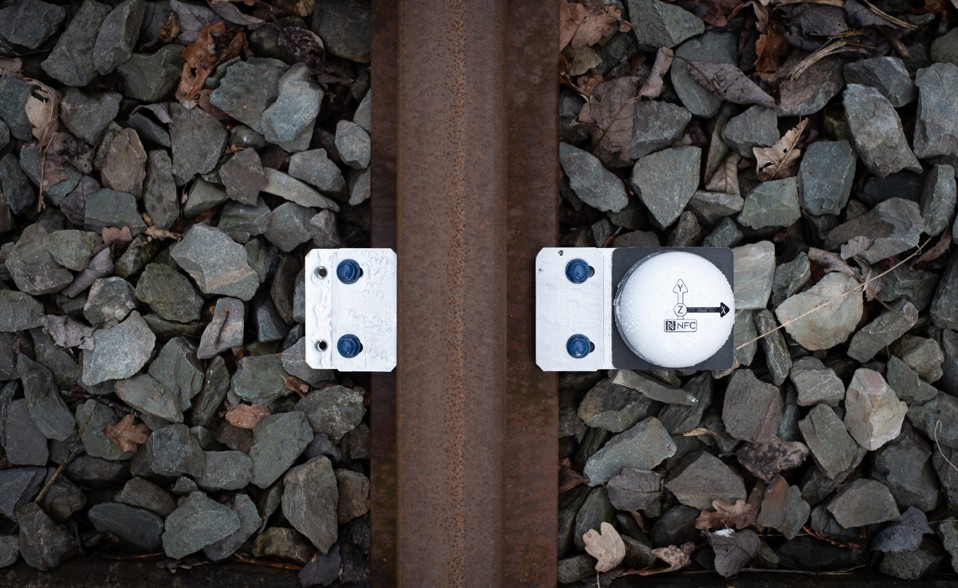
Significant improvement in vertical profile accuracy
Field testing has demonstrated the advantages of rail-mounted monitoring. In testing on timber ties with 50 cm sensor spacing, rail-mounted tilt sensors improved longitudinal profile accuracy by approximately 87% compared to tie-mounted systems—including in the most extreme observed conditions.*
*Based on testing with Transportation Technology Transfer (TTT) Inc. at White Heath, Illinois, USA (2024).
This improvement is especially important in degraded track conditions, where sleeper-based measurements are more susceptible to localised movement and error.
Reducing error in profile measurement
Tilt-based monitoring systems can be affected by the accumulation of small errors along a sensor chain.
Senceive mitigates this through:
- Fixed reference points outside the zone of influence
- Proportional correction along the sensor chain
- Data filtering to remove vibration and transient noise
- Optimised sensor spacing based on expected deformation
Rail-mounted installation further reduces uncertainty by eliminating error introduced through sleeper movement—resulting in significantly improved vertical track profile accuracy.
Designed for critical works and high-risk zones
Rail-mounted tilt monitoring is particularly valuable in environments where accurate vertical track profile measurement is critical, including:
- Under-track crossings (UTX)
- Piling and trenchless installation near track
- Drainage works within the Track Support Zone (TSZ)
- Embankment regrading
- Platform construction and modification
- Underbridge repair or replacement
- Temporary ground stabilisation
- Known settlement or heave risk locations
In these scenarios, real-time insight into vertical alignment enables faster intervention and reduces operational risk.
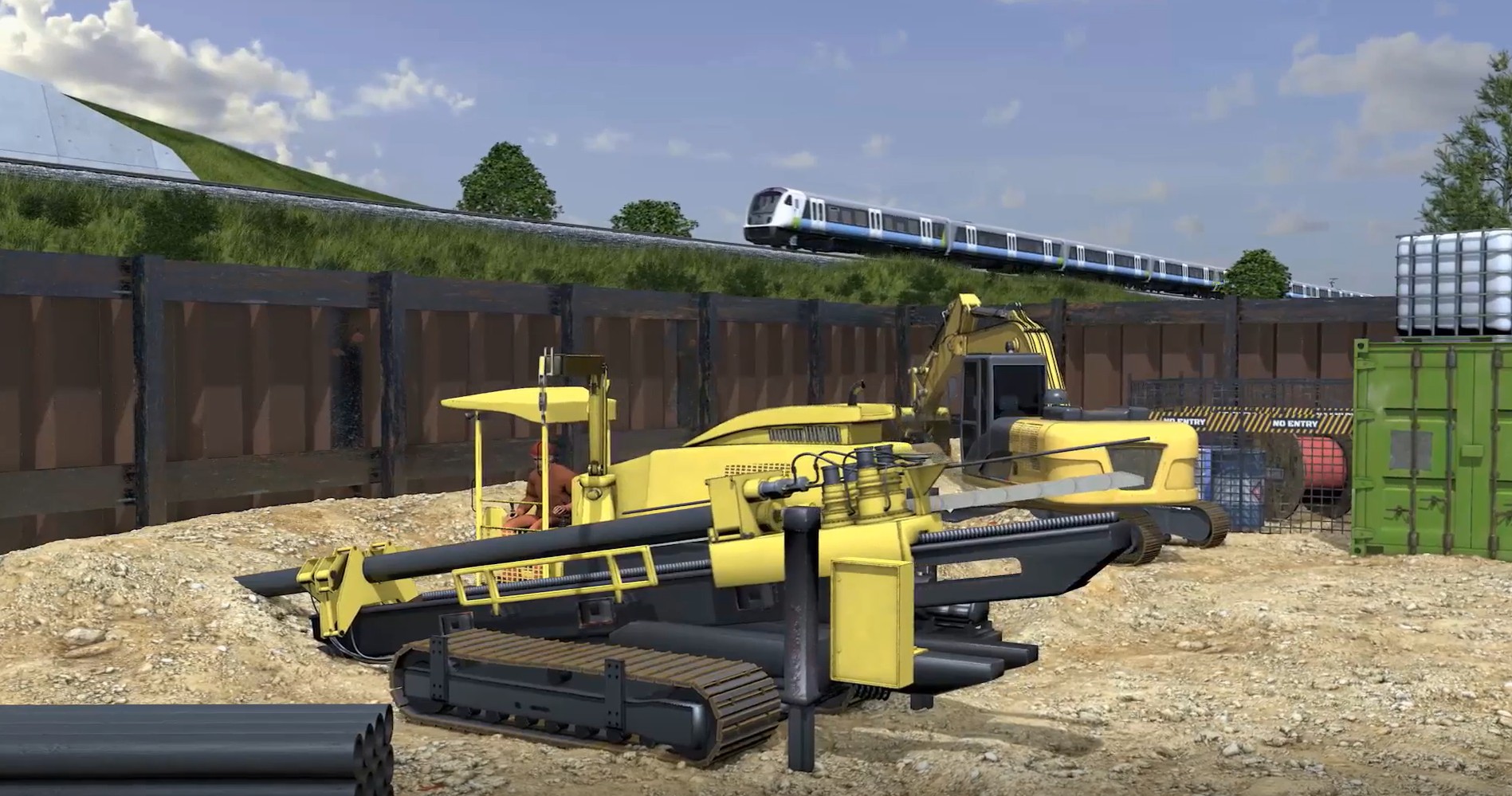
Continuous, real-time monitoring
Senceive’s wireless platform delivers key advantages over traditional monitoring methods:
- Continuous data capture (as frequently as every minute)
- Remote access without the need for site visits
- No line-of-sight requirements
- Low maintenance with long battery life (up to 15 years)
- Improved safety by reducing time on track
This enables reliable, long-term monitoring, even in complex or inaccessible environments.
Engineered for dynamic rail environments
Rail-mounted sensors must withstand significant vibration, impact, and dynamic loading.
Senceive’s solution has been validated through:
- Extensive laboratory shock and vibration testing
- Large-scale field deployments with over 150 sensors
- Exposure to more than 55 million gross tons (MGT) of traffic
- Environmental testing from -20°C to +30°C
- Continuous live track testing under active operations
Iterative design improvements, including specialised mounting systems with integrated shock absorption ensure stable positioning and consistent measurement performance over time.
Proven rail-mounted configuration options
Testing has shown that simple magnetic mounting alone does not provide sufficient stability in live rail conditions. Senceive’s rail-mounted solutions incorporate secure fixing and integrated shock-absorbing technology to maintain accuracy and reliability under real-world loading conditions.
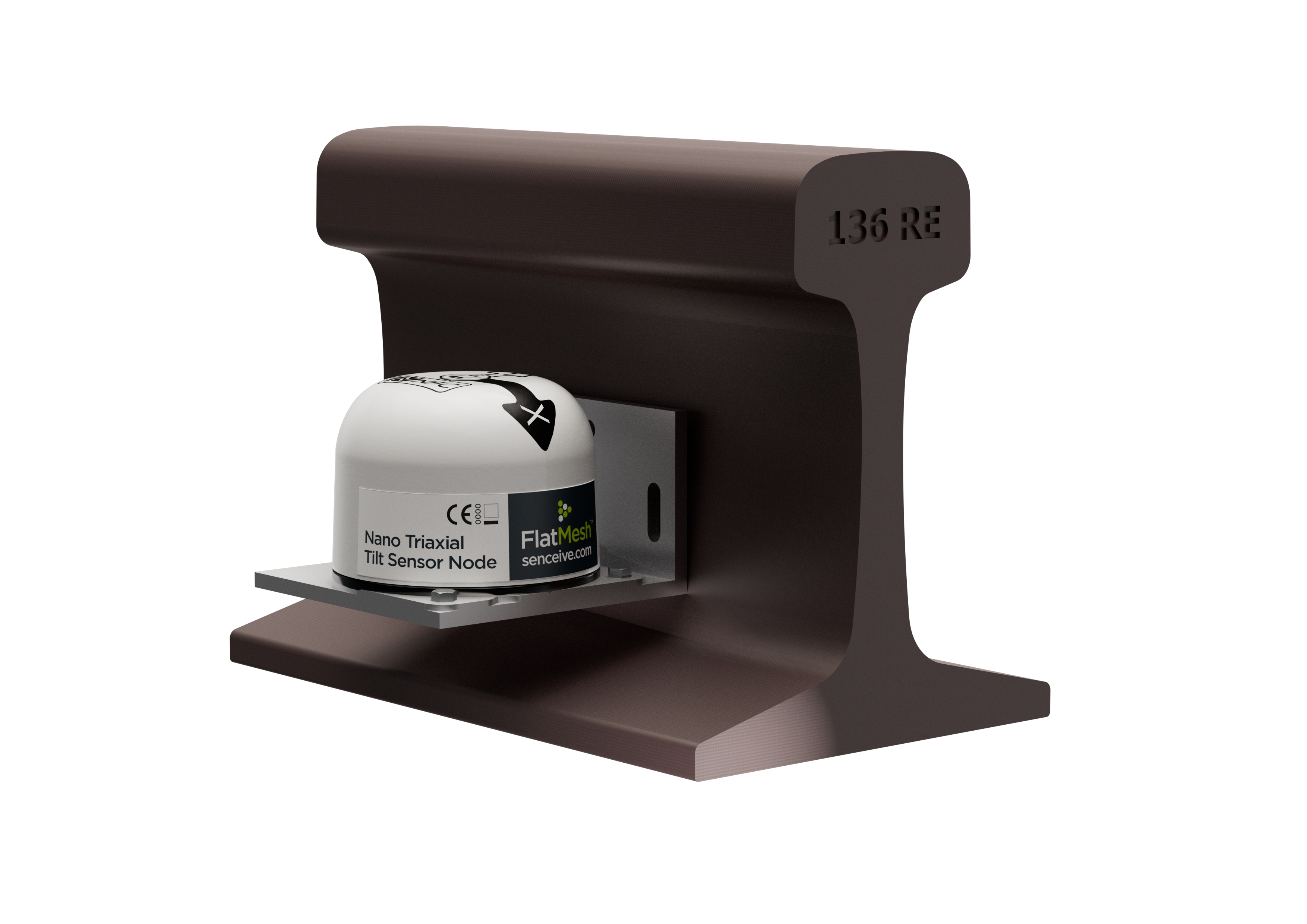
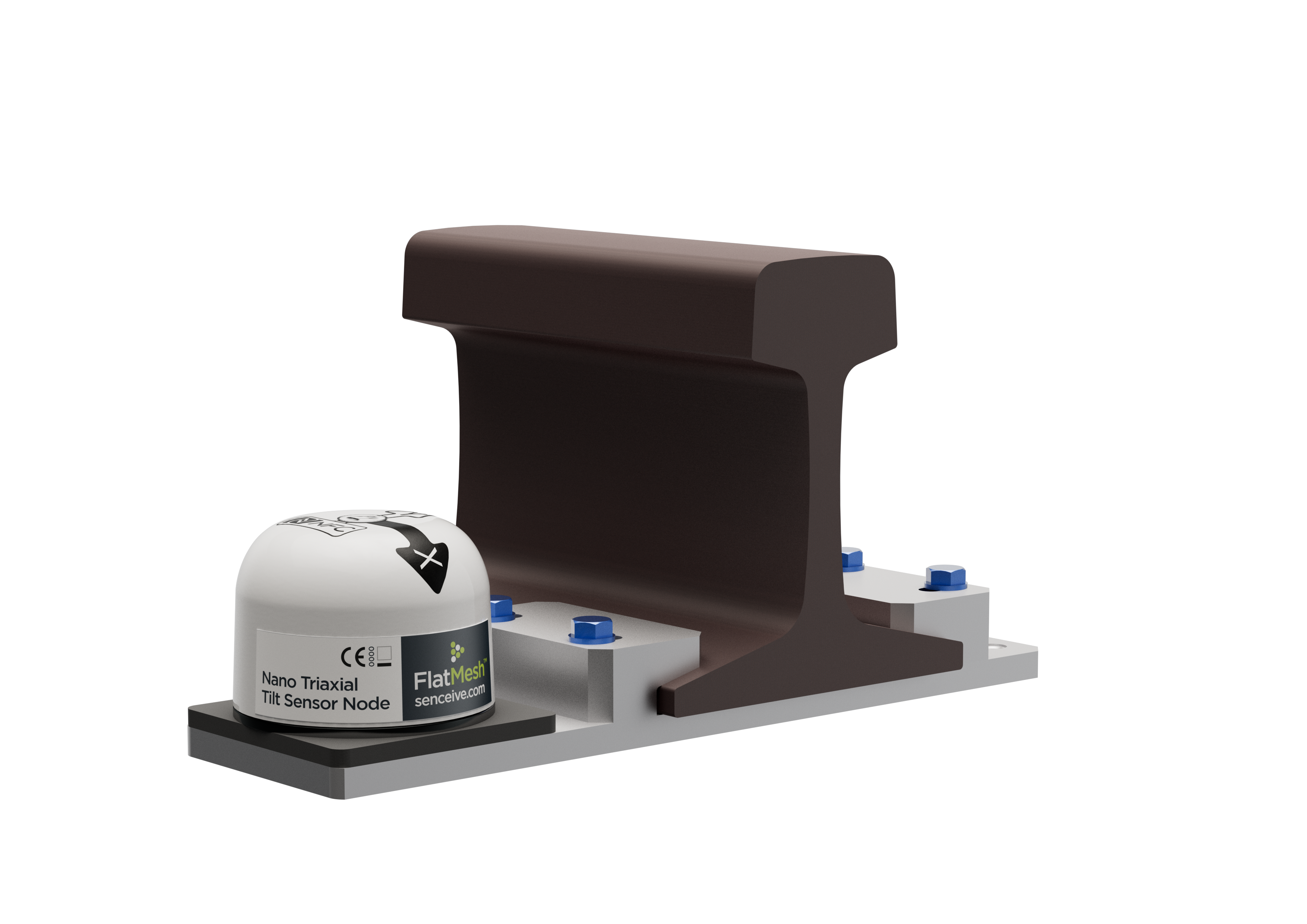
Right Angle Bracket: robust, fixed positioning and Vibration Pad Bracket: Enhanced resilience in high-vibration environments
A smarter way to understand track behaviour
Rail-mounted tilt monitoring enhances trackbed monitoring by delivering:
- Earlier detection of vertical movement
- Higher-resolution insight into rail behaviour
- Faster, more informed decision-making
- Greater confidence during critical works
- Reduced maintenance costs and operational disruption
Built on proven expertise
Trackbed monitoring has been at the core of Senceive’s solutions for over 20 years. As rail networks evolve, so too does the need for more precise and reliable data. For heavy-haul and high-demand railways where vertical alignment plays a critical role -precision measurement is essential. Rail-mounted tilt monitoring represents a significant advance in measuring vertical track profile - enhancing accuracy while addressing the challenges of live rail deployment.