








Reliable Monitoring in Hard-to-Reach Dam Structure in Germany
Challenge
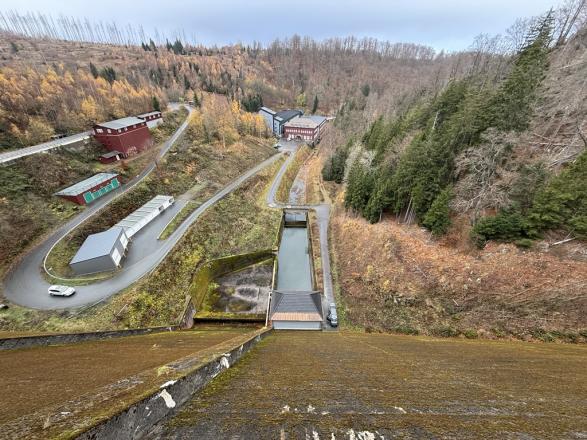
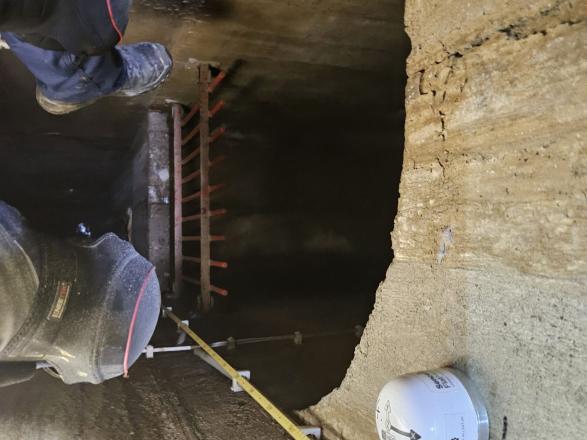
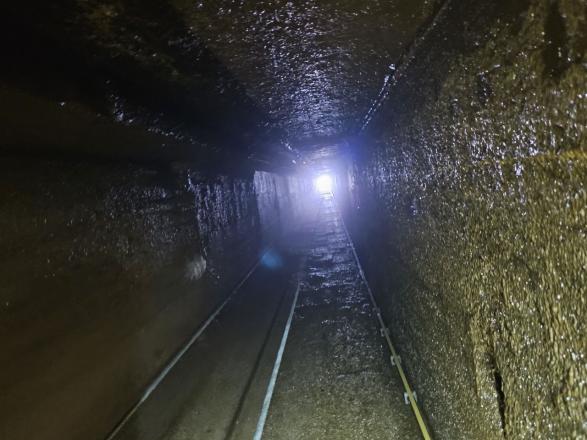
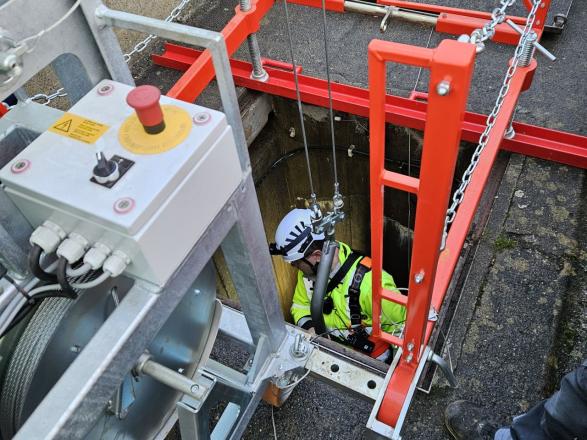
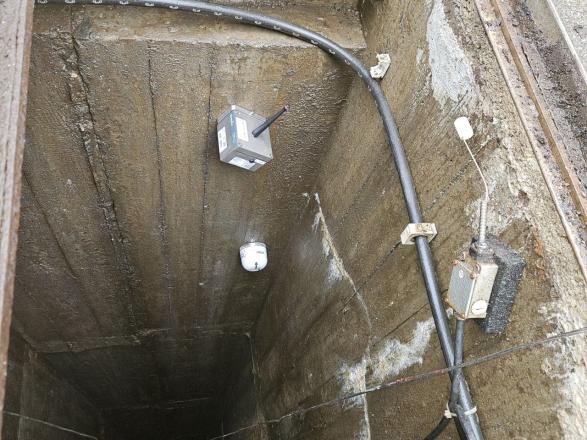
Monitoring structural behaviour within deep, enclosed dam infrastructure presents significant technical challenges. At a dam operated by Harzwasserwerke GmbH in Germany, vertical shafts extending up to 50 metres into the structure required long-term geodetic monitoring. These shafts are not only difficult to access but are also permanently damp, creating a harsh environment for instrumentation.
Additionally, the shafts are sealed with heavy concrete slabs, raising concerns about whether wireless signals could successfully transmit data to the surface. Ensuring reliable communication without frequent maintenance interventions was critical, as regular physical access to the shafts is both complex and undesirable.
As Florian Schäfer from Allsat (trusted Senceive distributor) who oversaw the installation on-site, explains: "The exciting and unknown aspect for us was whether the data would even get out of the shaft with this massive concrete cover. The sensors operate wirelessly, and we wanted to ensure stable communication between the sensors and the gateway."
Ullrich Britz from Harzwasserwerke adds:
“The wireless aspect was absolutely crucial. The battery operation and simple installation were equally important. We can install the sensors externally on the structure or in hard-to-reach areas without having to build major infrastructure.”
Solution
Working closely with the dam operator, Allsat advised on and supported the implementation of a wireless monitoring solution tailored to these challenging conditions.
Eight Senceive wireless NanoMacro Triaxial Tilt Sensors were installed within the vertical shafts to continuously measure structural movement. These sensors capture high-precision tilt data across both horizontal axes, enabling the calculation of vertical deflection curves over time. This data is integrated with environmental factors such as reservoir water levels and temperature to provide a comprehensive understanding of structural behaviour.
Ullrich Britz explains: “The simplicity of the installation and operation was an important factor for us. The system was installed very quickly and worked reliably straight away.”
To overcome the challenge of signal transmission through thick concrete coverings, repeater sensors were strategically installed beneath the slabs to maintain a stable communication pathway between the sensors and the gateway located at the dam crest. Measurement data was transmitted reliably and without interruption. Britz adds: “That worked surprisingly well. We now have a very reliable and stable connection, and the first winter months ran completely without problems.”
The sensors’ fully encapsulated IP69K-rated design ensured reliable operation in the shafts’ permanently humid conditions, eliminating the risk of moisture ingress and reducing the need for maintenance.
Florian Schäfer highlights the importance of this robustness: "The environment there is incredibly humid and the weather is challenging. Senceive sensors are completely IP69K rated. Nothing can get in. No other system is suitable for such areas."
With a battery life of up to 15 years, the sensors enable long-term monitoring without the need for frequent access. An essential advantage in deep shaft environments.
Outcome
The system has demonstrated reliable, uninterrupted data transmission despite the challenging structural and environmental conditions. Measurement data is consistently delivered to the gateway, enabling continuous monitoring and analysis of the dam’s structural performance.
Britz explains: “We were able to resolve deformations in the range of one to two millimetres over the course of a day. The level of detail that a system like this provides is truly remarkable.” "Today we can see much more precisely how temperature and water level affect the structure and how deformations change over the course of a day or year."
The robust sensor design has proven highly effective in damp environments where other technologies may fail or require frequent servicing.
By eliminating the need for regular maintenance visits, the solution significantly reduces operational effort and risk, as well as providing economic benefits. "Traditional measurement methods quickly add up to several thousand euros per measurement period," explains Britz. "With this wireless system, we achieve a return on investment within approximately two years."
The success of this installation has reinforced confidence in Senceive’s wireless monitoring technology. Harzwasserwerke GmbH has already implemented multiple systems and continues to expand its use, with additional installations planned.
Furthermore, the FlatMesh communications platform infrastructure allows for future expansion, enabling additional sensors, such as crack or joint monitoring devices, to be easily integrated as monitoring requirements evolve.
This project demonstrates how Senceive’s wireless tilt sensors provide a dependable solution for long-term dam monitoring in hard-to-reach and extreme environments. By combining precision measurement, robust construction, and reliable wireless communication, operators can achieve continuous insight into structural behaviour with minimal maintenance intervention.
Created on: Thu 18th Jun 2026


The environment there is incredibly humid and the weather is challenging. Senceive sensors are completely IP69K rated. Nothing can get in. No other system is suitable for such areas.