





Soil Moisture Monitoring Provides Earlier Insight into Railway Ground Conditions
Challenge
Changing weather patterns, including prolonged periods of hot, dry weather followed by intense rainfall, are placing increasing pressure on railway earthworks.
Changes in soil moisture can affect soil strength and stability, particularly in clay soils where prolonged drying can cause shrinkage and cracking. For infrastructure managers, understanding these changing conditions can provide valuable context alongside movement monitoring.
The challenge was to monitor soil moisture remotely and understand how conditions vary both over time and at different depths within the soil profile.
Solution
Senceive combined its remote monitoring technology with Delta-T Devices, using InfraGuard™ to provide an additional layer of environmental insight for railway drainage and earthworks monitoring.
InfraGuard™ enables engineer's to respond to changing conditions. For example, when soil moisture or other environmental parameters indicate changing conditions, monitoring can be used to provide additional insight into how the surrounding ground and infrastructure are responding.
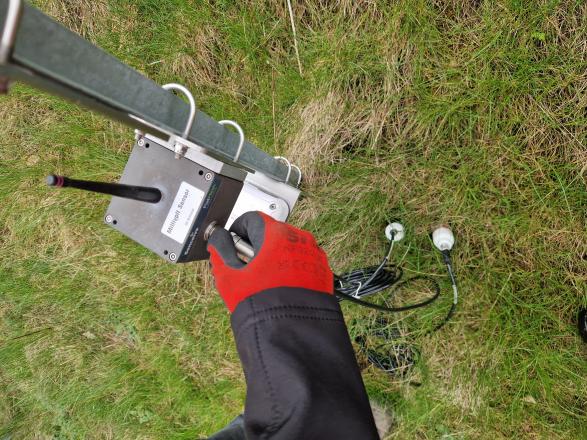
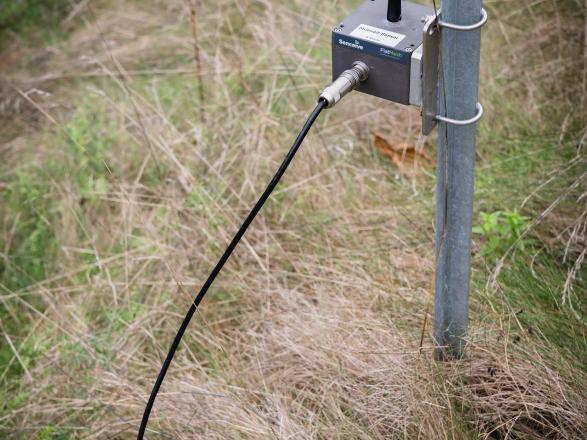
Senceive combined its remote monitoring technology with Delta-T's SM150T Soil Moisture Sensors and PR2 Profile Probes to provide near real-time insight into changing ground conditions.
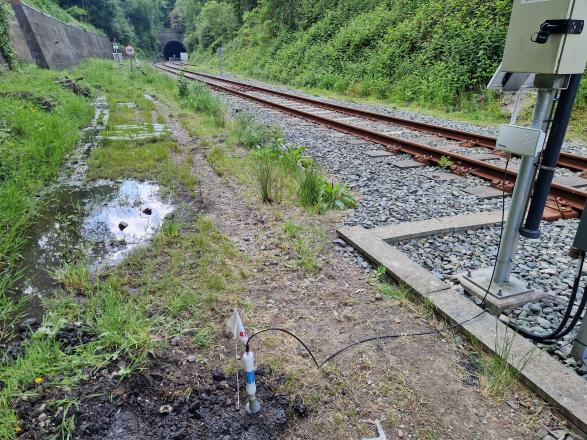
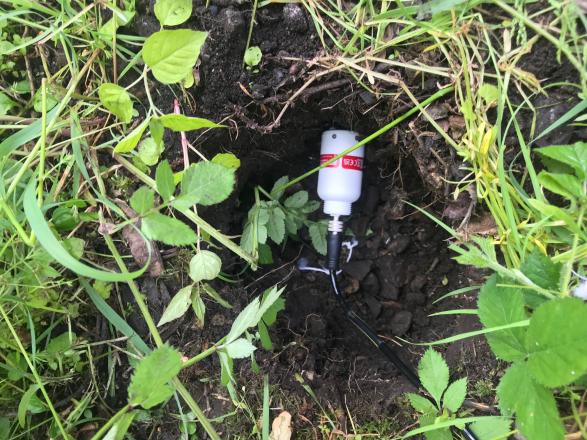
At Senceive's Dudley test site, an SM150T and PR2 Profile Probe are being used to monitor soil moisture. The PR2 measures moisture at multiple depths, providing a more detailed view of conditions through the soil profile.
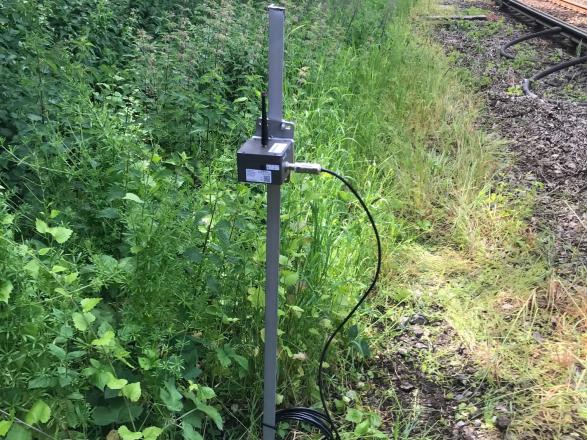
The technology has also been deployed on Network Rail infrastructure, with SM150T sensors installed horizontally at depths of 30 cm at locations prone to flooding.
The sensors connect to Senceive interface nodes, with data transmitted via an on-site gateway and cellular network to WebMonitor™ for online visualisation and analysis.
By combining soil moisture data with movement monitoring, engineers can see not only whether the ground is moving, but also the environmental conditions that may precede or accompany that movement.
Outcome
The monitoring has demonstrated the value of collecting soil moisture data at different locations and depths.
During a prolonged period of hot, dry weather, SM150T sensors at the Network Rail site recorded a continuing reduction in soil moisture. Meanwhile, at the Dudley site, PR2 measurements showed that moisture levels remained higher and comparatively stable at greater depths, providing information that would not necessarily be apparent from surface conditions alone.
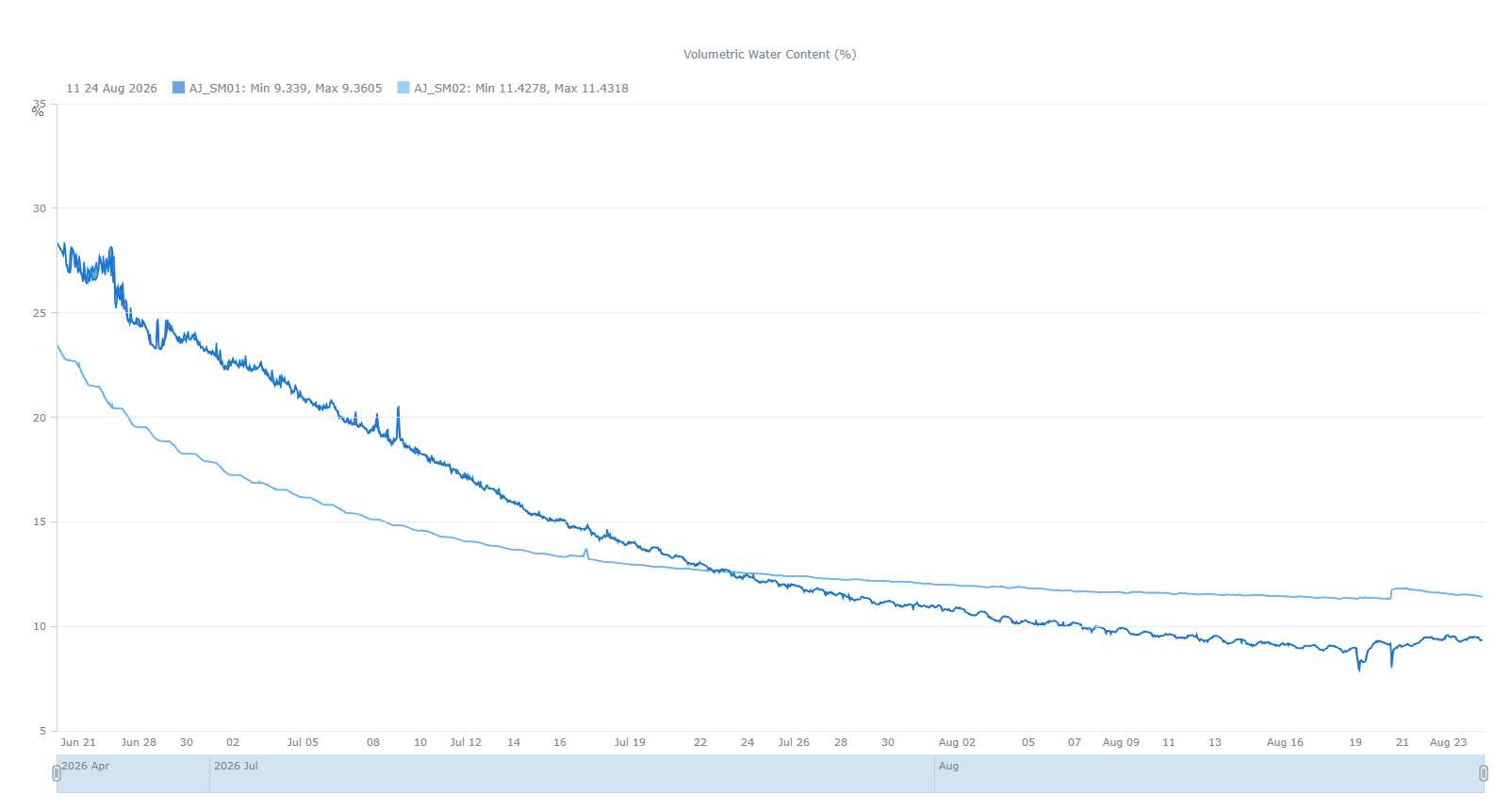
Soil moisture data from SM150T sensors installed at separate positions on Network Rail infrastructure, showing declining moisture levels during the recent prolonged period of dry summer weather.
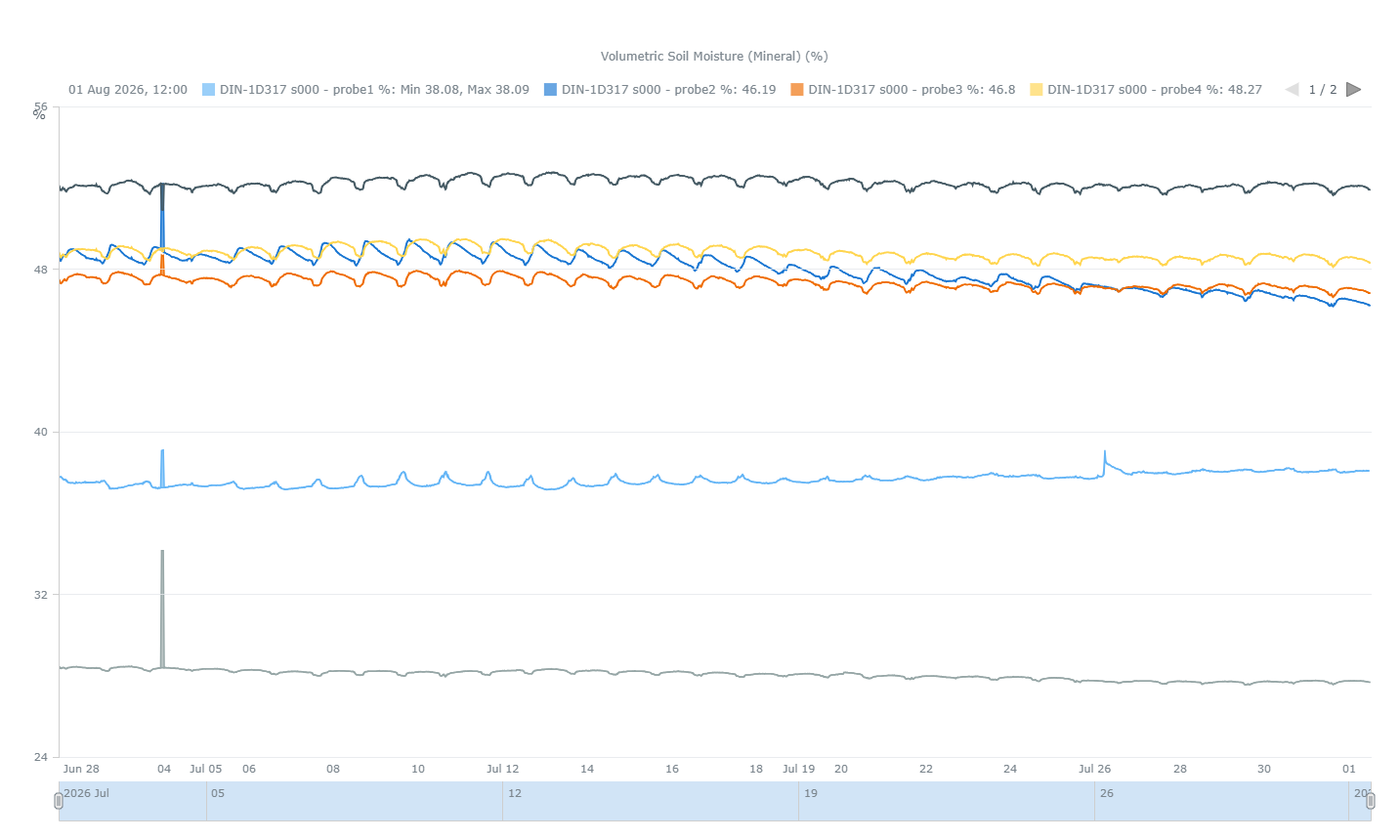
PR2 Profile Probe data from Senceive's Dudley test site, showing soil moisture measurements at multiple depths through the soil profile. During the dry monitoring period, moisture remained higher and comparatively stable at greater depth.
The approach provides an additional source of environmental data for understanding railway earthworks, embankments and other ground conditions.
The Senceive and Delta-T Devices solution is now being applied to railway monitoring in the UK and Germany, demonstrating how remotely collected soil moisture data can complement movement monitoring and help engineers build a more complete picture of changing ground conditions.
Created on: Tue 22nd Sep 2026


The Senceive and Delta-T approach is being applied to railway monitoring in the UK and Germany. As increasingly variable weather patterns place new demands on ageing infrastructure, understanding the relationship between water, soil and ground movement is becoming ever more important.
Key Points
- Monitor changing soil conditions
- Add context to ground movement data
- Support earlier awareness of changing conditions